Under a swing or slide, real grass turns into a bare, muddy hollow within a few weeks. Artificial grass simply stays green there, however often feet are used as brakes. If you want a play area where children can also fall safely, there is one extra topic to think carefully about: fall protection.
Is artificial grass alone enough?
Artificial grass on a sand bed feels a lot softer than paving, but it does not absorb a fall from a climbing frame or swing sufficiently. For spots under play equipment you therefore lay a shock-absorbing underlay beneath the grass. These are panels of foamed material that absorb the impact of a fall and let water through at the same time, so the play area is not waterlogged after a shower.
How thick that underlay needs to be depends on the fall height: the higher the equipment, the thicker the underlay. See this as a general guideline. Check the specifications of the underlay and of your play equipment for the exact requirements, and if in doubt, choose a thicker layer.
Which grass should you choose?
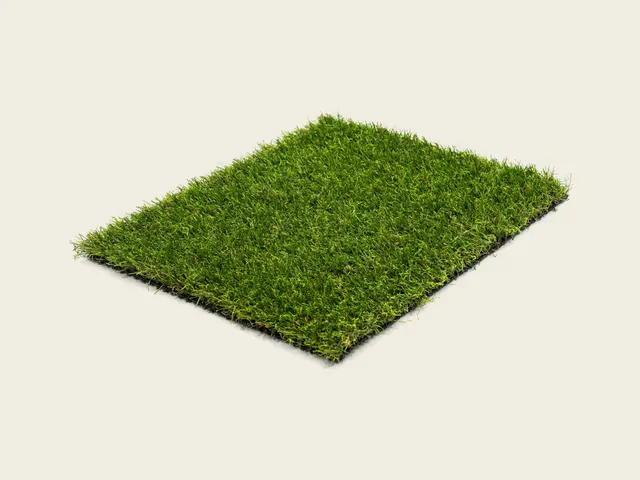
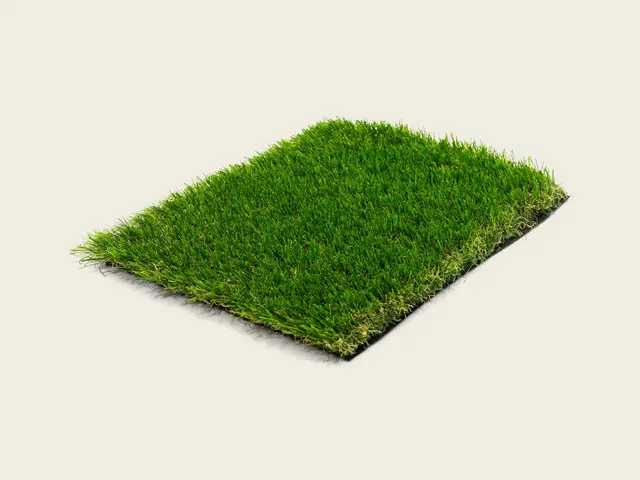
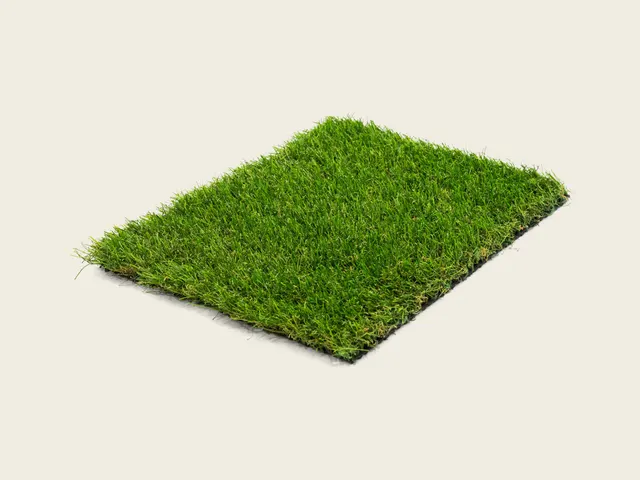
Children brake, slide and jump in the same spots again and again. There you need a sturdy grass that springs back quickly after use. A short to medium-length, hard-wearing fibre holds up best. Very long, soft fibres flatten more quickly in busy spots. In the category artificial grass for play you will find types made for intensive use, and the choice helper helps you choose if you are unsure.
Installing play equipment
Plan the order carefully and you avoid hassle afterwards:
- Set fixed play equipment into the ground before the artificial grass goes on, or use ground anchors that go through the grass.
- Then cut the grass out neatly around the posts.
- You can simply put a trampoline or paddling pool on the grass. When you remove it, brush the fibres back up.
How to build up the sub-base before the grass goes on is explained in laying artificial grass. You will find seam tape and other materials under accessories.
Maintaining a play area
A play area has more to put up with than the rest of the garden. A little extra attention keeps it looking good:
- Remove leaves and twigs regularly.
- Brush up the fibres more often than elsewhere in the garden, especially under the swing and at the end of the slide.
- Rinse away stains with water straight away.
- Top up with washed quartz sand of 0.2 to 1 mm where the grass feels thinner.
Usually a quarter of an hour a month is enough.
Feel it first?
Children play on the grass with bare feet and hands, so it is good to know how it feels. Request a few free samples and let the children test them themselves. For the rest of the garden, take a look at artificial grass for the garden.