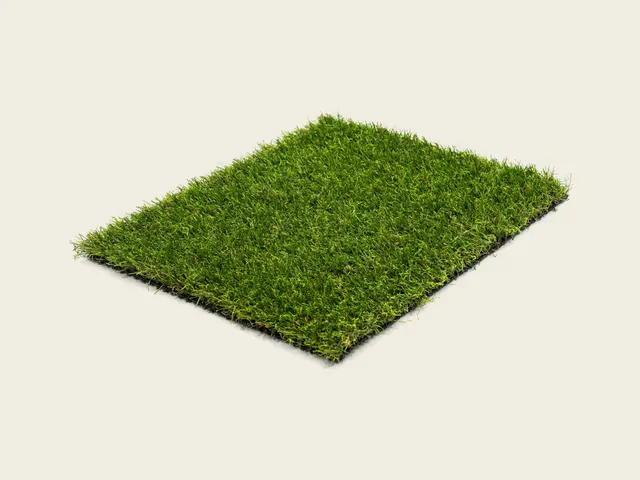
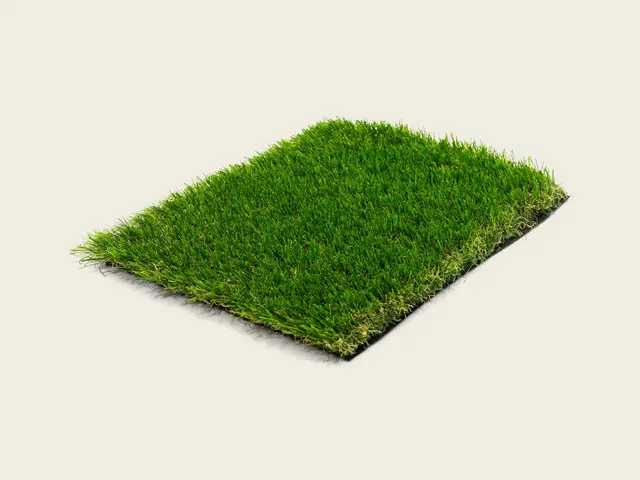
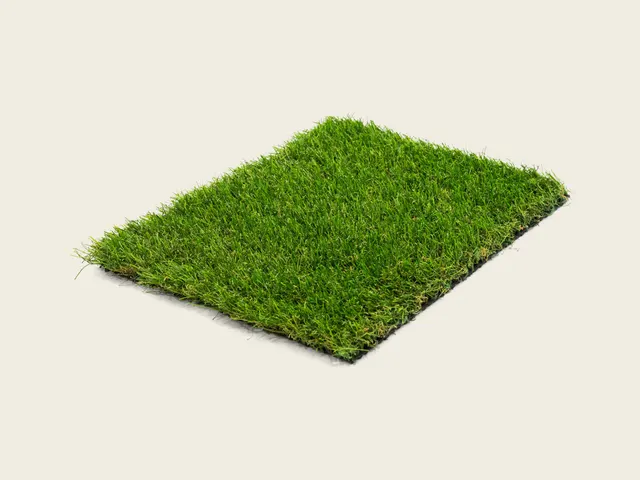
A dog and a real lawn rarely get on well for long. A bare path appears along the fence, the grass turns yellow on the regular wee spots and after a shower you walk the mud straight into the kitchen. Artificial grass largely takes those annoyances away, provided you choose a type that can take a knock and you prepare the sub-base properly.
Which fibre suits a dog?
Dogs run, brake and turn, often in exactly the same spots. There you want a fibre that is sturdy and springs back quickly after use. A fibre length of 30 to 40 mm is the best choice for this:
- At the shorter end (around 30 mm) the grass is at its sturdiest and easiest to keep clean.
- Towards 40 mm it feels fuller and softer, and is still strong enough for an active dog.
Very long fibres are less practical. On the regular routes they flatten sooner, and hair and dirt sink in between them more easily. Torn between two types? The choice helper lists the options, and in the category artificial grass for dogs you will find types suited to intensive use.
Weeing and pooing
Artificial grass has a backing with holes, so urine simply drains into the ground. The grass itself does not discolour, so you no longer get yellow patches. You pick up solid waste just as you do now. Then quickly rinse the spot with the garden hose to keep it fresh. Especially in warm, dry weather it is wise to rinse the regular wee spot with water once or twice a week.
Does your dog love digging?
In an ordinary lawn a keen digger can make sizeable holes. With artificial grass that does not work: the mat is firmly anchored and the weed membrane underneath keeps the soil in place. Most dogs try a few times and then find something else to do. A well-laid sub-base is therefore just as important here as the grass itself. How to build it up is explained in laying artificial grass.
Watch out for heat
On a sunny summer's day artificial grass gets warmer than real grass. That is no reason not to do it, but it is a reason to take it into account:
- Make sure your dog always has a spot in the shade.
- Put a bowl of fresh water outside.
- Rinse the grass with the garden hose on a hot afternoon; it then cools down quickly.
Removing hair and dirt
Loose hair, sand and leaves stay on top of the fibres. With a leaf blower or a stiff broom you are done in a few minutes. Do not use chlorine for cleaning; water, possibly with a little vinegar, works fine.
Feel it first?
Every dog is different, and every grass feels different. Order a few free samples, put them in the garden and see how your dog reacts to them. That way you know for sure which type to choose before you order for the whole garden. If you have a larger garden with a dog, also take a look at artificial grass for the garden.