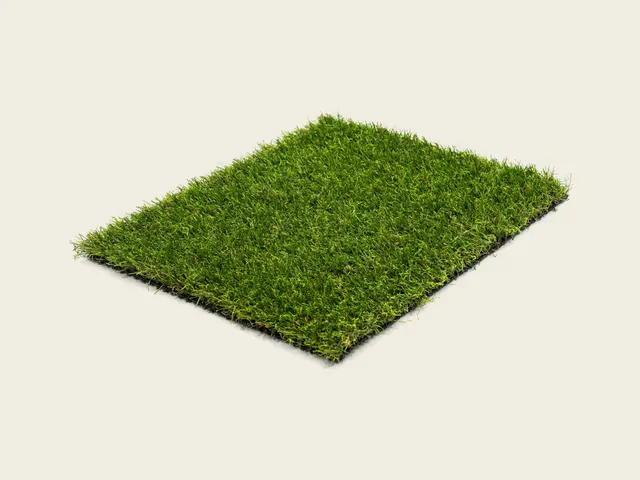
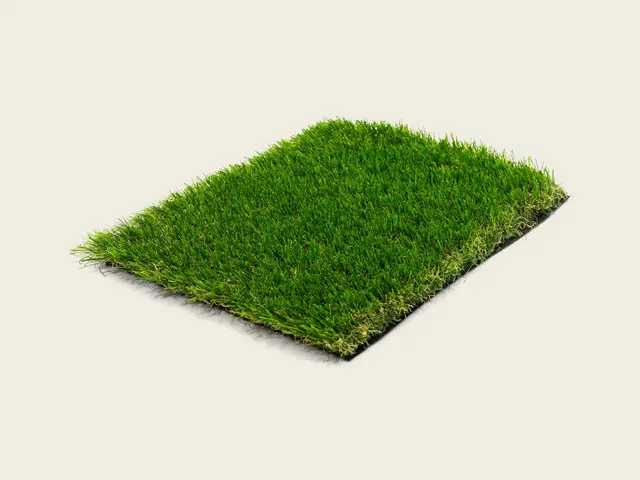
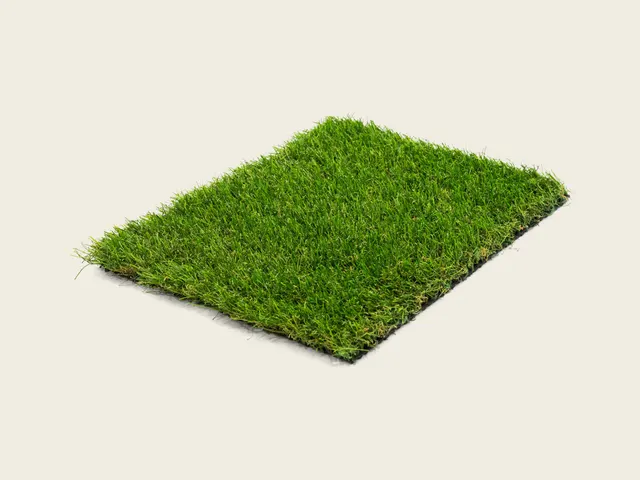
Let's be honest: Kunstgraspunt is a webshop built around sharp prices. So we are the last to say that cheap is always bad. But there is a difference between affordable and too cheap. With artificial grass you often only see that difference after a summer or two. With the points below you can assess any type, from us or anywhere else.
The yarn and the fibre
Most good artificial grass fibres are made of polyethylene that is resistant to sunlight. With very cheap grass the fibres are sometimes thinner or made of a different plastic. The result: they discolour faster, become brittle and break off.
Also pay attention to the colour. Grass in a single flat shade of green quickly looks fake. Natural-looking artificial grass has several shades of green and a brownish or beige curled thatch fibre at the bottom.
The weight in grams per m²
This is one of the best indicators. The more yarn there is per m² in the mat, the fuller it is and the better the fibres stay upright. So don't just look at the pile height, but also at the weight in g/m² and the number of stitches per m². A cheap roll with the same length often contains much less yarn. Then the grass lies flat after a while and you can see the backing through it.
The shape of the fibre
Not every blade is flat. The shape of the cross-section determines how soft the grass feels and how well it springs back after use. A fibre with a good shape stands back up after being walked on; a simple, flat fibre is more likely to stay down. You notice this best by running your hand over a sample and standing on it for a moment.
The backing and permeability
The backing holds the fibres in place and must let rainwater through. Good artificial grass has enough holes in it, so water drains away quickly. A cheap backing sometimes drains poorly, so puddles stay put, or releases fibres over time. Feel free to tug at a few blades of a sample: properly anchored fibres don't give.
UV resistance
Artificial grass lies in the sun for years. Without good UV protection it fades and loses its strength. For every type, ask whether it is UV-resistant and colourfast. You can read more about what determines the lifespan in how long does artificial grass last.
Buying affordably without regret
If you want to keep an eye on the price, there are smart ways to do so without compromising on what really matters:
- Choose a shorter fibre. A sturdy type of 30 to 35 mm is usually the most affordable and does very well in a busy garden. See which pile height to choose.
- Order the right width. We cut to size from 2 and 4 metre wide rolls. With the width that suits your garden you are left with less offcut waste.
- Lay it yourself. That saves you a lot. Read how in laying artificial grass.
In our range, prices run from €17.95 to €33.95 per m². View all types or let the choice helper help you decide.
Feel tells you more than a photo
You feel the difference between good and too cheap best with your hands. Order free samples and put them next to what you see elsewhere. Run your hand over them, stand on them and look at them in daylight. Then you'll soon know what you're buying.