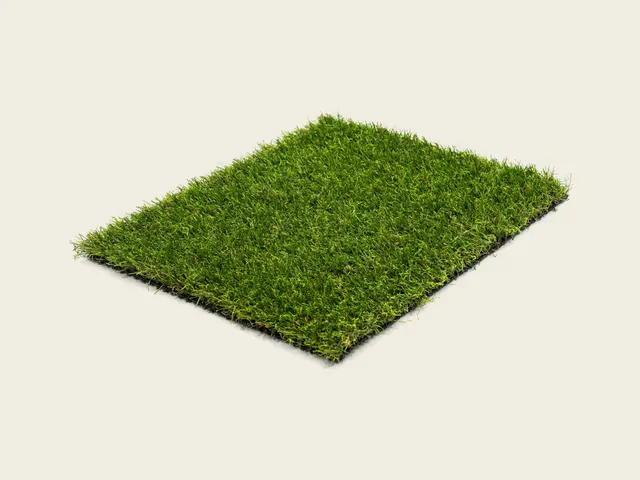
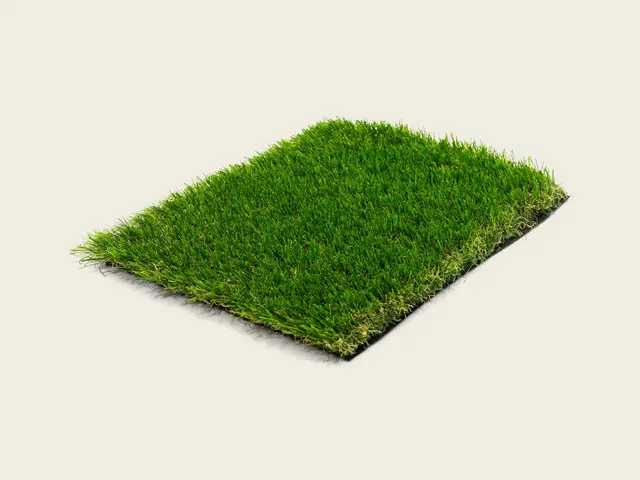
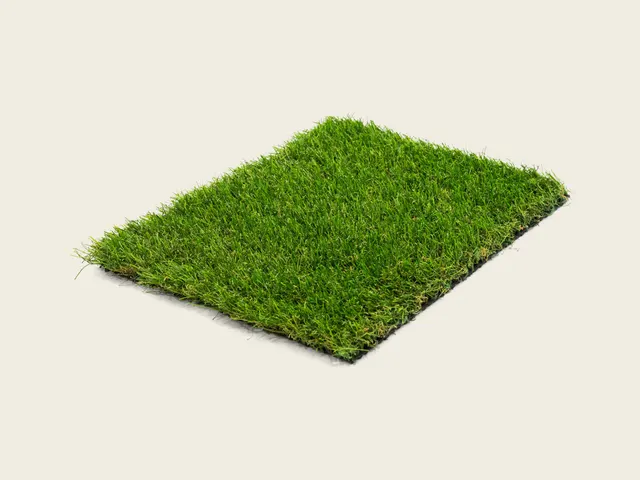
After rolling out, your artificial grass already looks almost finished. Yet something is still missing: sand. It's the last step and so also the step that is most often skipped or done too sparingly. You'll notice that within a few months.
Why sand in artificial grass?
- The fibres stay upright. The sand sinks to the bottom of the mat and supports the fibres. They're less quick to flatten.
- The mat stays put. The weight keeps the grass flat, even when it gets warm. Without sand it can start to ripple.
- The fibres last longer. The lower part gets less sun and wear.
Which sand do you use?
Use washed quartz sand with a round grain of 0.2 to 1 mm. Round grains slide easily down between the fibres and aren't sharp.
Don't use play sand or masonry sand. These often contain fine particles that clog the holes in the backing, so rain can no longer drain away.
How much sand do you need?
Allow 5 to 10 kg per m². A short fibre is at the lower end, a long fibre at the upper end. A few examples:
- 20 m² with a short fibre: about 100 kg.
- 50 m²: between 250 and 500 kg, depending on the fibre length.
You can order quartz sand with the accessories. The calculator on the product page works out the quantity for your area.
How to brush it in
1. Wait for dry weather
Wet fibres hold on to sand. It then stays on top instead of sinking down.
2. Spread in rounds
Three thin layers are better than one thick one. Spread with a shovel or spreader and distribute it as evenly as possible over the whole lawn.
3. Brush against the pile
Take a stiff broom and sweep the sand between the fibres. You'll see the grass stand up as you do. Repeat spreading and brushing until it's all in.
4. Have a feel
Run your hand through the grass. You should feel the sand at the bottom, but barely see it on top.
Common mistake: sanding too early
Have you made seams? Walk firmly along them first before you spread sand and start brushing. How to make the seams is explained in making artificial grass seams.
Topping up later
Rain, wind and use slowly remove some of the sand. If the grass feels limper or the fibres flatten more quickly, top it up. In an ordinary garden that's roughly once every two to four years, on a play area or walkway sometimes more often.
Read more about the whole sequence in the step-by-step guide to laying artificial grass.